


The Unhappy Professional
Therapy For Vicarious Trauma: When Someone Else's Crisis Lives in Your Nervous System
Vicarious trauma is the cumulative effect of exposure to other people's pain, fear, conflict, or crisis.
You are not the person who lived through it. You are the one who witnessed it, managed it, tried to fix it, or carried responsibility for the outcome. But your nervous system absorbed it anyway.
Vicarious trauma develops in professionals who work at the intersection of high stakes and high emotion. Lawyers, physicians, and executives are particularly vulnerable because the work itself places you in direct contact with intensity that most people never experience.
The exposure is indirect. The impact on your body and mind is not.


Online therapy for high-achieving individuals who want relief, clarity, strategy, and psychological depth — not just talk.
What Vicarious Trauma Actually Looks Like
Vicarious trauma does not announce itself. It accumulates. You stay functional, capable, and effective on the outside. Inside, something shifts.
The clearest sign is intrusive replay of someone else's moment, not your own.
The client's face when they got the verdict. The images from the case file. The employee breaking down in your office. The patient's family in the hallway. The failure you tried to prevent but couldn't. These moments do not belong to you, but they live in you. They surface at random times. While you are driving. In the shower. Late at night when your mind finally slows down.
Other signs include:
A sense of responsibility that extends beyond what you could control. Not "I worked too hard," but "I didn't do enough. It's my fault it went that way." Even when the outcome was never fully in your hands.
Your nervous system stays activated in the spaces between work. The crisis is over, but your body has not reset. You feel tense, alert, braced. Rest does not come easily.
Difficulty tracking where their emotional reality ends and yours begins. You absorbed something. You are not sure when it happened or how much of it you are still carrying.
Over time, this shows up as irritability, numbness, cynicism, trouble sleeping, withdrawal from people who used to matter, or an inability to turn off your thoughts. Your mind keeps running even when there is nothing urgent happening.
You work inside other people's conflict, trauma, and worst days. You read case files that contain graphic details. You hear stories that stay with you. You watch clients lose. You see people at their most desperate, most manipulative, or most broken. Even when you win, you carry the weight of what it took to get there.
Physicians
You are exposed to suffering, death, fear, and grief as part of the job. You make decisions under pressure where outcomes matter and control is limited. Patients and families look to you to fix what cannot always be fixed. You witness pain you cannot take away. You absorb the emotional residue of every difficult conversation, every poor prognosis, every code that did not go well.
How Vicarious Trauma Shows Up in Different Professions
Click on your profession to learn more about how vicarious trauma effects your cohort.
Vicarious Trauma, Burnout, and Compassion Fatigue


These terms are often used interchangeably, but they describe different states.
Burnout is exhaustion from overload, imbalance, or a system that demands too much. It is about depletion.
Compassion fatigue is the cost of constant empathy and caregiving. It is about running out of emotional capacity to give.
Vicarious trauma is the internal impact of absorbing someone else's experience. It is about what stays inside you after repeated exposure to intensity that was never yours to begin with.
Many high-achieving professionals experience all three at once.
Vicarious trauma does not respond to surface interventions. It requires work that addresses both the cognitive patterns you have developed and the physiological impact on your nervous system.
EMDR Therapy for Specific Memories That Will Not Let Go
That case you cannot get out of your head. The time you were fired. The images that keep surfacing from a client who did not do well. The moment you watched someone you worked with for months get led away in handcuffs.
EMDR helps your nervous system file these moments so they stop activating you. The memory does not disappear. The emotional charge does. You can think about it without your body reacting. You can walk into a courtroom, a boardroom, or a hospital and not immediately feel the residue of what happened before. Click to learn more about EMDR Therapy.
Psychodynamic Work for Unconscious Patterns
Vicarious trauma accumulates quietly. You witness suffering as part of your professional role. You metabolize crisis, loss, violence, grief - whatever your clients carry, you carry too. At first, your training holds. Then something shifts. Cases that used to close start staying open in your mind. The work that once energized you now depletes you in ways that sleep does not fix.
The exposure alone does not explain why it affected you the way it did. Why certain cases lodged when others didn't. Why some clients' pain became yours in ways that felt urgent, personal, impossible to discharge. Something in you was already organized to carry other people's suffering. Psychodynamic work examines that organization. What made you vulnerable to this absorption. Why you took on their crises as if they were your own. Why professional responsibility became indistinguishable from something much older, much deeper. Once you understand what you are actually carrying - and why - you can begin to separate what belongs to your work from what you brought to it.
Psychodynamic work clarifies these unconscious patterns so you can make conscious choices about how much you carry. It gives you insight into why certain cases, certain clients, or certain moments affected you more than others.
Types of Therapy for Vicarious Trauma
I understand first hand how difficult it can be to carry the weight of unresolved emotional pain. My diverse personal and professional experiences have given me a deep appreciation for how unique each individual’s journey is.
Whether it’s healing from childhood trauma, navigating relationship difficulties, or overcoming professional stress, I’m here to help you find the peace and fulfillment you deserve.

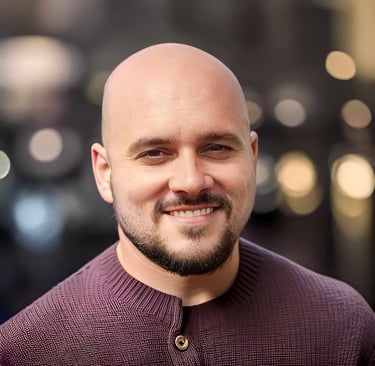
Zack Rothwell, PMHNP
Psychiatric Health Nurse Practitioner
Master of Science - UNC Chapel Hill
Accepting New Clients
1530 Wilson Blvd Suite 100-105, Arlington, VA 22209
Helping leaders find joy and purpose in life.
© 2025. All rights reserved.
Online Therapy in: CO, DC, NC, NY, TX, VA, WA & WV